

The Story Behind the Heart Monitor You May Have Seen Me Wearing: Living With an Atrial Septal Defect

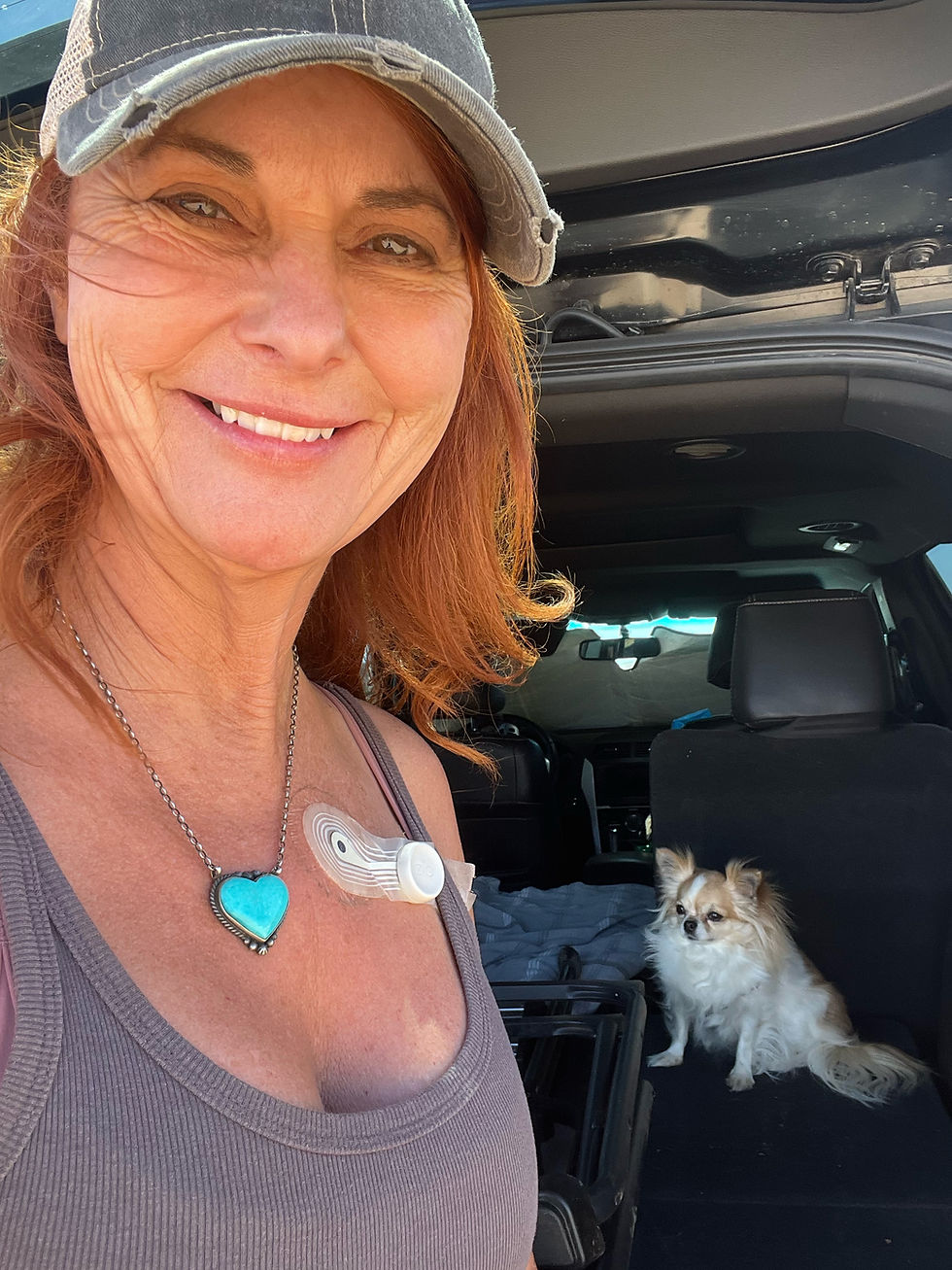
Living With an Atrial Septal Defect: My Story of Strength, Fitness, and Adaptation
Some of you may have noticed the heart monitor I was wearing in photos and during events this May. A few people reached out and asked about it, and I realized maybe it was finally time to share my story.
Not for sympathy, but because maybe it might help someone else living with an undiagnosed heart condition, chronic migraines, or physical limitations that people can’t always see.
At 45 years old, I found out I had been living my entire life with a congenital heart defect called an Atrial Septal Defect (ASD), essentially a large hole in my heart that I was born with.
The crazy part is… I had absolutely no idea.
Looking back now, so much of my childhood suddenly made sense.
As a kid, I always struggled physically. I couldn’t run like the other kids could. PE class was miserable for me because no matter how hard I tried, I just physically couldn’t keep up. I remember trying to explain to people that something felt wrong, but nobody really understood.
My mother had a very hard time providing food for us when I was growing up, and I honestly didn’t get the nutrition I needed as a child. I went hungry a lot, so for years I assumed that was the reason I struggled physically.
But it turned out there was a much bigger reason.
Even as an adult, anytime my heart rate got really elevated, I would gasp for breath. I simply learned to adapt. I avoided high-intensity cardio because it made me feel terrible, but I kept moving through life anyway.
And honestly, I lived a very active life.
I showed horses competitively for over 20 years and competed at the world level. I trained and broke my own horses for years. I spent countless weekends camping in the woods with my horses, hauling hay, carrying tack, setting up camp, riding trails, and living an extremely physical outdoor lifestyle. I rode in the desert, the mountains, and the woods, and spent most of my life outdoors and physically active.
Then at 45, I went into urgent care for something completely unrelated, a bad earache. The doctor noticed my heart murmur and strongly encouraged me to get it checked out.
Since my husband at the time had heart issues, I already knew a good cardiologist, so I scheduled an appointment. They ran one test, which turned into several more tests that same day. Hours later, the doctors sat me down and told me they had discovered a very large hole in my heart.
I remember being completely shocked.
They explained that most ASDs are found and repaired in infancy or childhood, but somehow mine had gone undetected for decades.
Atrial Septal Defect Surgery and Life After Repair
Not long after that, I underwent surgery to repair the ASD using a mesh closure device. The device contains nickel, and afterward my doctors suspected I may have had some sensitivity or reaction to it because I experienced some stroke-like symptoms early on after the repair.
Over the years, I’ve also dealt with ongoing issues including elevated heart rates, heat intolerance, migraines, and episodes where intense exercise and heat could trigger debilitating migraines that at times landed me in the emergency room. A lot of these migraines also came with severe vomiting, which honestly made the entire experience absolutely miserable.
One time while paddleboarding at Lake Powell in the summer heat, I became so sick that I actually had to be rescued off the lake.
But here’s the thing…
I never wanted my condition to define my life.
That doesn’t mean it’s always easy. There have absolutely been frustrating, painful, and scary moments. But I’ve always tried to focus on adapting instead of quitting.
When I first moved to Arizona, I picked up mountain biking and absolutely fell in love with it. The problem was, anytime the temperatures were around 70 degrees or higher, I’d almost always end up with horrible migraines afterward. I knew there was a good chance I was going to spend the afternoon miserable, but honestly… it still didn’t stop me from riding.
Call me crazy, but I love being outdoors and being physical.
Fitness Over 50 While Living With an Atrial Septal Defect
Now I ride dirt bikes, which honestly might be one of the hardest sports I could’ve picked up in my mid-50s. My heart rate can climb incredibly high while riding, so I’ve had to learn to pay close attention to my body, manage my health carefully, and know my limits.
Recently, after talking with a nurse practitioner friend who also rides dirt bikes, she encouraged me to start seeing a cardiologist regularly again since it had been almost 10 years since my repair surgery.
That’s why I ended up wearing the heart monitor this May. My new cardiologist wanted to get a baseline and monitor what my heart was doing during my normal daily activities, including workouts, riding, and life in general.
And speaking of workouts…
People are often surprised to learn that despite everything I’ve dealt with physically, I lift weights hard 4 to 5 days a week.
Honestly, I’m probably the fittest I’ve ever been in my life.
I also deal with degenerative disc disease in my back and an old ACL injury from a horse accident when I was 26. Some days my body definitely reminds me of all the miles I’ve put on it over the years.
But I still keep showing up for my life.
If anything, discovering my heart condition taught me something important: our bodies are incredibly resilient, and sometimes the things that challenge us the most can also teach us how strong we really are.
For most of my childhood, I thought I was weak because I couldn’t physically do what other kids could do.
Turns out my heart had been working overtime my entire life.
And somehow, despite all of it, I still built a life filled with horses, camping, adventure, motorcycles, fitness, competition, and the outdoors.
That means something to me.
I wanted to share this story because I know there are other people out there struggling with health issues, chronic pain, limitations, or challenges that nobody else can fully see or understand.
Please don’t automatically assume your life has to become smaller because of them.
Sometimes we simply learn how to adapt, grow stronger, and keep going anyway.
And sometimes strength simply means continuing to show up for your life the best you can.
Comments